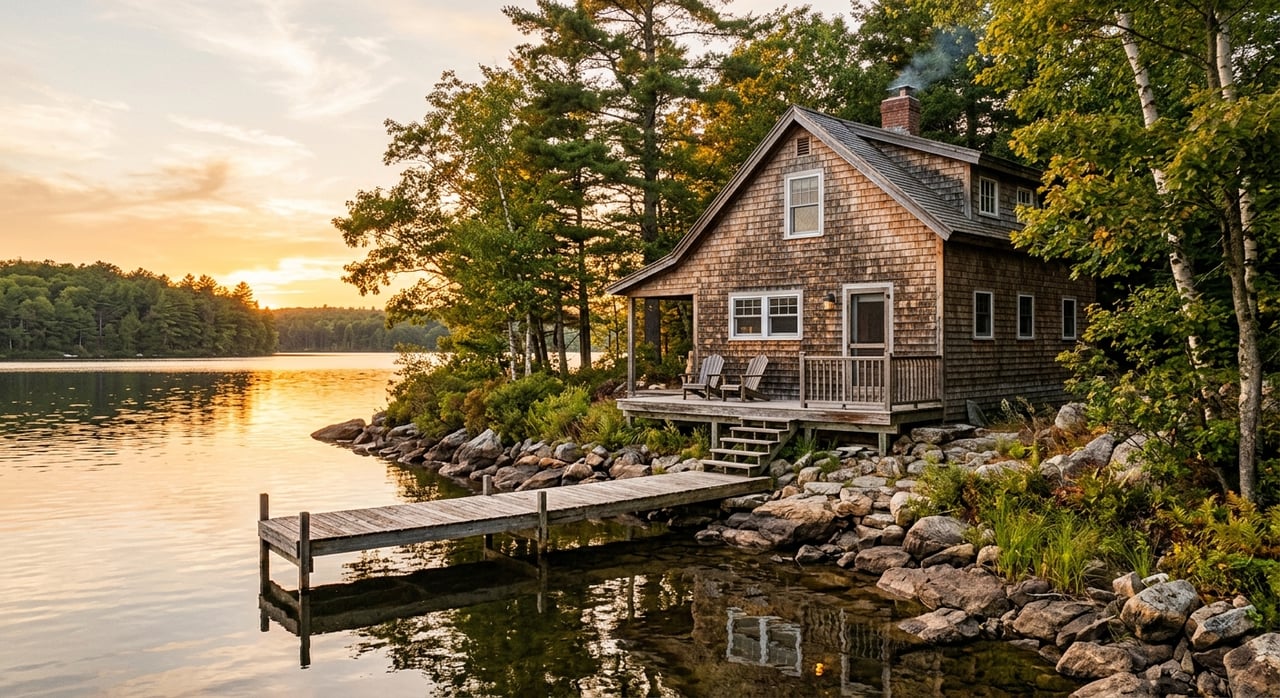
If lakefront living in Goshen has caught your eye, you are probably looking for more than just a house. You are looking for a certain pace, a certain view, and a property that fits the way you actually want to spend your time. In Goshen, that decision is especially important because lake homes can mean very different things depending on the lake, the rules, and the type of access you are buying. This guide will help you sort through the details that matter most before you make a move. Let’s dive in.
Why Goshen Draws Lake Buyers
Goshen is a small Litchfield County town with an estimated population of 3,165, and its lake market stands out because of two well-known options: Woodridge Lake and Tyler Lake. While the town has other ponds and reservoirs, these two lakes shape most buyer conversations about waterfront and water-oriented living.
Pricing also shows how distinctive the lake segment can be. According to local market reporting, Goshen’s 12-month median single-family sale price in 2025 was $645,000, with average price per square foot at $315. That same reporting noted Woodridge Lake sales ranging from a $200,000 lot to a $1.21 million home, while a lakefront sale on Milton Road reached $2.69 million, underscoring how property type, frontage, and setting can push values well above the town median.
Compare Woodridge and Tyler Lake
Choosing between Goshen’s lake areas starts with one big question: do you want a private, managed lake lifestyle or a more open public-lake experience? That distinction can affect everything from your budget to how you boat to how much flexibility you have as an owner.
Woodridge Lake Lifestyle
Woodridge Lake is a private, amenity-rich community built around a 385-acre man-made lake. The association describes about five miles of shoreline, four private beaches, a clubhouse, pool, tennis and pickleball courts, a fitness center, and a marina with 168 slips. The marina currently has a waiting list, which is worth noting if boat access is a major part of your plan.
This setup can be a strong fit if you want a structured, resort-style environment with shared amenities and clear community standards. It may be less ideal if you picture a more casual arrangement where you can easily bring in guest boats or keep a larger vessel at the ready.
Tyler Lake Lifestyle
Tyler Lake offers a different feel. The Tyler Lake Protective Association describes it as a public recreational facility where boating and swimming are allowed. Connecticut DEEP’s year-round trailer launch at 10 Park Road has no launch-specific regulations, but it also lists just five parking spaces and no docks.
In practical terms, Tyler Lake tends to offer a more open, less club-oriented experience. That can appeal to buyers who value flexibility and public-lake use over private amenities and a highly managed community structure.
Know What Kind of Access You’re Buying
One of the biggest mistakes buyers can make is assuming that every “lake property” delivers the same ownership experience. In Goshen, the difference between direct waterfront, deeded access, and community amenity access can be significant.
At Woodridge, many buyers are choosing not just a home near water, but a specific private-lake system with shared amenities and rules. At Tyler Lake, the experience may depend more on the parcel itself, nearby access points, and the property’s relationship to the public lake. Before you move forward, make sure you understand exactly what rights transfer with the property.
Questions to Ask About Access
- Do you have direct shoreline frontage, deeded access, or only community-use rights?
- Are there any restrictions on docks, moorings, or shoreline changes?
- Can guests bring boats?
- If there is a marina, is slip access guaranteed or waitlisted?
- Are there seasonal or rental-related limits on lake use?
These details can affect both your day-to-day enjoyment and long-term resale value.
Review Boat and Marina Rules Early
For many buyers, the lake is the main event. That is why boating rules should be part of your early screening process, not something you review after you fall in love with a house.
At Woodridge, the association limits boats to 20 feet, 90 horsepower, and outboard motors only, according to its community information and rules. Guest boats are generally prohibited except for sanctioned events, which can be an important limitation if you regularly host family and friends.
Woodridge also adds another layer of compliance for powerboats. Owners must meet state registration requirements, register with the association, and show proof of at least $250,000 in marine liability and property-damage insurance. If you plan to use a registered vessel on Connecticut inland waters, the state also requires an AIS Stamp.
Understand Association Rules and Carrying Costs
If you are considering Woodridge Lake, you are not just buying a home. You are buying into an ownership structure with governing documents, operational rules, and costs that go beyond standard town taxes.
According to the Woodridge Lake governing documents, members face rules on guest counts, renters, shoreline improvements, and common-area use. Current rules cap a member’s daily guests at six. Renters must have at least a 14-day lease to use common facilities, and renters may not use personally owned motorized boats, personal watercraft, or sailboats on the lake.
There are also property-specific shoreline controls. The association retains a 10-foot shoreline easement, owns rights to the lake itself, and requires approval before installing docks, ramps, seawalls, buoys, beaches, or similar improvements. If your vision includes changing the waterfront setup, those approvals matter.
Costs matter too. In its May 2025 taxpayer letter, the Woodridge Lake Sewer District recommended a 5.1 mill rate for FY 2025/2026 and said the average taxpayer increase would be about $280, or 11%, due to plant breakdown and capital needs. That is a useful reminder that total ownership cost can include taxes, association obligations, and district-level charges.
Check Zoning and Lot Size
Lake property value is closely tied to what can and cannot be done with the land. In Goshen, zoning rules can shape expansion potential, setbacks, utility requirements, and how scarce certain property types really are.
According to Goshen’s zoning regulations, the Woodridge Lake Zone requires a minimum lot size of 35,000 square feet and a 75-foot shoreline setback for principal buildings. The zone also requires connection to the Woodridge Lake Sewer System.
For residential-agricultural areas around Tyler Lake, Dog Pond, and West Side Pond, the town also uses 75-foot lake setbacks. Goshen’s inland wetlands commission regulates proposed work within 100 feet of wetlands or watercourses, which is especially important if you are considering site changes, additions, or shoreline work.
Why Lot Size Matters
Woodridge was originally subdivided into roughly 700 one-acre lots, and more recent sales commonly fall around 0.8 to 1.0 acres, based on community history and local reporting. That tends to create a more consistent lot profile.
By contrast, some older Tyler Lake-area parcels can be much smaller. The research notes a recent Tyler Lake Heights sale on 0.21 acres, which shows how much more variable lot sizes can be outside the Woodridge system. For you, that means each property should be evaluated on its own merits rather than by lake name alone.
Plan for Inspections Beyond the House
A lake property deserves a deeper level of due diligence than a typical in-town purchase. The house matters, of course, but so do the land, the water relationship, and the ownership obligations attached to them.
Beyond a standard home inspection, buyers should review shoreline condition, drainage, access rights, dock rights, association documents, and any existing approvals or restrictions. If the property uses septic or sits near sensitive water areas, those details become even more important.
Tyler Lake’s environmental guidance highlights regular septic pumping, septic inspection, low-phosphorus detergents, and limiting fertilizer and runoff to protect water quality. Woodridge rules also prohibit discharges into the lake, discourage chemicals without approval, and regulate shoreline work. These are not small details. They are part of responsible ownership.
Verify Flood Insurance Early
Many buyers assume flood insurance is a general waterfront issue, but it is more specific than that. The right way to approach it is property by property.
FEMA states that lenders generally require flood insurance for buildings in a Special Flood Hazard Area when the loan is federally backed. You can check the parcel through FEMA’s flood map tools. This is one of those steps that can affect your monthly cost and closing timeline, so it is smart to review it early.
What Drives Value in Goshen Lake Homes
The phrase “lakefront premium” is real, but in Goshen it is not one-size-fits-all. Final value depends on a mix of frontage, view, lot size, access rights, community structure, and long-term carrying costs.
A home with direct frontage, flexible use rights, and a strong setting may command a very different price than a home with deeded access or a more limited shoreline setup. Likewise, a private amenity-rich community can be a major plus for one buyer and a constraint for another. The best purchase is the one that matches how you plan to use the property, not just the label on the listing.
Buy With a Clear Checklist
Before you make an offer on a Goshen lake property, it helps to organize your priorities around use, rules, and long-term cost.
Buyer Checklist
- Confirm whether the property has direct frontage, deeded access, or community amenity access
- Review lake and association rules before offering, especially for boats, guests, and rentals
- Verify marina slip availability if boating access is important
- Check lot size, setbacks, and wetland-related restrictions
- Investigate sewer, septic, and shoreline maintenance obligations
- Review flood map status for the specific parcel
- Estimate total ownership cost, including taxes, district charges, and compliance costs
Lakefront living in Goshen can be rewarding, but the best outcomes usually come from asking the right questions early. If you want experienced local guidance as you compare Woodridge Lake, Tyler Lake, or other water-oriented properties in Litchfield County, connect with E.J. Murphy Realty. Their team brings deep local knowledge and a thoughtful, hands-on approach to helping you evaluate the details behind the view.
FAQs
What should you compare when buying lakefront property in Goshen, CT?
- You should compare direct frontage versus deeded access, association rules, boating restrictions, lot size, setbacks, carrying costs, and the specific ownership rights that come with the property.
What makes Woodridge Lake different from Tyler Lake in Goshen?
- Woodridge Lake is a private, amenity-focused community with extensive rules and shared facilities, while Tyler Lake is a public recreational lake with a more open and less club-oriented setup.
Are there boating restrictions at Woodridge Lake in Goshen?
- Yes. Woodridge limits boats to 20 feet, 90 horsepower, and outboard motors only, and it also restricts guest boats except for sanctioned events.
Do Goshen lake properties have special zoning requirements?
- Yes. Goshen applies shoreline setbacks and other zoning rules that can affect building placement, lot use, and future improvements, with Woodridge also requiring sewer connection in its zone.
Should you check flood insurance requirements for a lake home in Goshen?
- Yes. Flood insurance requirements depend on the specific parcel and whether the building is in a Special Flood Hazard Area tied to a federally backed loan.
What extra costs can come with owning a lake property in Goshen?
- Depending on the property, you may have costs related to association obligations, sewer district charges, boat registration and insurance, septic maintenance, shoreline upkeep, and flood insurance.