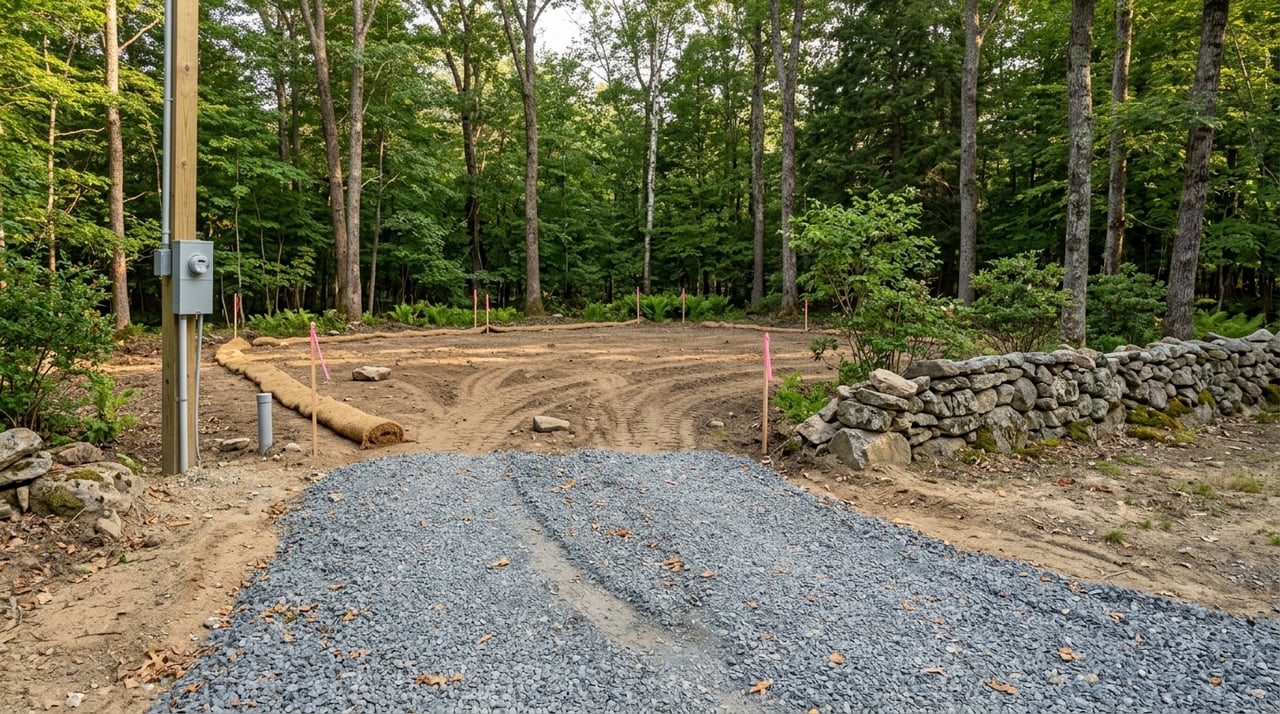
Thinking about buying land and building a home in Cornwall, CT? It can be an exciting path, especially if you want more privacy, a custom layout, or a setting that fits the way you live. But in Cornwall, a pretty parcel is not always a simple building site, and the difference matters. This guide will help you understand what to check before you buy so you can move forward with clearer expectations and fewer surprises. Let’s dive in.
Why Cornwall Land Needs Careful Review
Cornwall is a rural town in Litchfield County with hills, valleys, farmland, village areas, and the Housatonic River shaping the landscape. That variety is part of the appeal, but it also means one parcel can be very different from another in terms of slope, access, wetlands, and building potential.
If you are comparing land with an older home that needs work, the decision is not just about price or acreage. In Cornwall, the better question is whether the parcel has a legal buildable area and a realistic path for well, septic, driveway, zoning, and building approvals.
Know Cornwall’s Common Zoning Patterns
A good land search usually starts with zoning. Cornwall’s zoning regulations are designed in part to preserve farmland, natural features, and water supply resources, so lot requirements and development limits can be stricter than some buyers expect.
R-1 land in Cornwall
R-1 is Cornwall’s most permissive residential district. It requires a minimum lot size of 1 acre, and the regulations describe this land as relatively level, well drained, and accessible to state roads or village centers.
For buyers, that can make R-1 parcels worth a closer look when ease of access and simpler site conditions are top priorities. Still, zoning alone does not guarantee that a lot is buildable.
R-3 land in Cornwall
R-3 requires a minimum lot size of 3 acres. The town describes this zone as generally including hilly upland areas, open space, and agricultural land.
That means you may find appealing rural settings, but you may also run into more site constraints. Slope, access, and septic design can become bigger parts of the conversation.
R-5 land in Cornwall
R-5 requires a minimum lot size of 5 acres. Cornwall’s regulations note that much of this zone includes state forestland or land that may be unsuitable for development because of steep slopes, shallow or exposed bedrock, and wetlands.
A larger parcel can sound straightforward on paper, but in practice it may be the most complex type of lot to evaluate. More acreage does not always mean more usable building area.
Village and business-area parcels
Cornwall also has a General Business district in village center areas. Some parcels near Cornwall Bridge, Cornwall Village, Cornwall Hollow, East Cornwall, and West Cornwall may not function like a typical rural homesite because zoning, property layout, and access conditions can differ.
This is one reason local context matters so much. Two parcels with similar acreage may have very different development paths depending on where they sit in town.
What Makes a Lot Buildable in Cornwall
In Cornwall, buildability is much more specific than simply owning enough land. The town defines a buildable area as land without wetland soils, waterbodies, watercourses, utilities, access easements, rights-of-way, or naturally occurring slopes over 25 percent.
That area also must be large enough to contain a 50-foot-radius circle. On top of that, the minimum buildable area is 20,000 square feet, and nearly all buildings must fit within it.
Setbacks shape the building envelope
Cornwall requires a 100-foot front setback and 50-foot side and rear setbacks in the R-1, R-3, and R-5 residential zones. Even on a parcel that looks generous, these setback rules can narrow where a house, driveway, and related improvements may actually go.
This is why a listing photo or online map should only be the starting point. The practical building envelope often becomes clearer only after survey review and town-level confirmation.
Online maps are only a first filter
Cornwall’s regulations state that facsimile zoning maps are for conceptual use only, while the official zoning map is on file with the Town Clerk. In some cases, the Zoning Enforcement Officer may require an A-2 quality survey by a Connecticut-licensed land surveyor.
For you, that means online mapping tools can help screen properties, but they should not be treated as final proof of where you can build. Easements, lot lines, and actual buildable area need closer verification.
Overlay Zones Can Add Another Layer
Some Cornwall parcels are affected by overlay zones. These include the Housatonic River Overlay Zone, Aquifer Protection Overlay Zone, Flood Hazard Zone, Cornwall Plains Zone, and Planned Conservation Zone.
When an overlay conflicts with the underlying zone, the more restrictive rule applies. That can affect design, review time, and overall feasibility.
Flood Hazard Zone rules
If a parcel is in the Flood Hazard Zone, residential and non-residential structures must have the lowest floor elevated to or above the base flood level. Site plans also need to reference available base flood elevation data.
That does not automatically make a parcel unusable, but it can affect design choices, cost, and engineering.
Housatonic River Overlay review
In the Housatonic River Overlay Zone, applicants should expect added standards and advisory review from the Housatonic River Commission for site plan and special permit applications.
If you are drawn to river-area property, it is smart to ask early how that overlay could affect timing and approvals.
Septic, Well, and Utilities Matter Early
In Cornwall, utility feasibility is often one of the biggest due-diligence items. Because many properties rely on private systems, you will want answers on water, septic, and electric service before getting too far down the road.
Private wells and septic approvals
Cornwall is part of the Torrington Area Health District, which oversees environmental health matters for the town. TAHD states that private wells are regulated by the district, new wells require a permit approved before drilling begins, and new septic systems and repairs are reviewed, inspected, and finally approved by the district.
Cornwall’s zoning regulations also require, in some applications, a comprehensive water and septic assessment prepared by a qualified professional engineer. If shared septic is proposed, a management plan for the common septic system is also required.
West Cornwall needs extra attention
Town documents for West Cornwall village describe a tight arrangement of property lines, septic systems, and drinking water wells. The town also notes that some existing individual septic systems there do not meet current health codes.
If you are weighing an existing home against a buildable parcel in a village setting, this is an area where utility and health-code feasibility deserve especially careful review.
Electric service questions
Cornwall is in Eversource’s Connecticut electric service territory. Buyers commonly confirm service availability and any needed line extensions or upgrades early in the process.
This step can help you avoid underestimating site-preparation costs.
Driveway Access Is Not a Small Detail
Access is heavily regulated in Cornwall, and it can make or break a land purchase. The town requires one accessway per lot with a minimum width of 50 feet, and only one driveway may serve an individual lot.
If the driveway connects to a town street, you must obtain a Permit to Disturb a Town Highway from the Board of Selectmen before zoning approval is issued. If the project joins a state highway, CTDOT approval must be shown.
Cornwall also requires buildings and uses to be accessible by emergency vehicles. In other words, a driveway is not just about convenience. It must also meet safety and review standards.
A Practical Path From Search to Construction
Buying land in Cornwall usually goes more smoothly when you treat the process as a sequence of checkpoints. That approach can help you spot issues before they become expensive surprises.
Step 1: Confirm zoning and lot status
Start by confirming the zoning district, any overlay zones, and whether the parcel is a legal buildable lot. If the property was created through subdivision, Cornwall’s subdivision regulations matter because no subdivision or resubdivision may be made, sold, or offered for sale until approved and properly recorded.
The town also strongly recommends informal preliminary subdivision review, even though it is not required. That can be helpful for early clarity.
Step 2: Check wetlands conditions
If the parcel touches wetlands or a watercourse, review Cornwall’s Inland Wetlands and Watercourses mapping and expect field verification. The town’s wetlands regulations say mapped boundaries are general only.
The actual location is determined by the real character of the land through field inspection and, if needed, soil or hydrology-based testing. This is another reason vacant land should be evaluated on the ground, not just on a screen.
Step 3: Prepare for zoning review
In Cornwall, zoning approval comes before construction. No structure may be erected, moved, enlarged, or changed to another use until a zoning permit is issued.
For a single-family home or permitted accessory structure, the application must include a plot plan or site plan showing property lines, proposed improvements, existing and proposed buildings, driveway locations, and other compliance information.
Step 4: Line up related approvals
Other approvals may also be needed before building begins, including driveway, wetlands, water and sewer, fire protection, building code, and health code approvals. Cornwall’s regulations place responsibility for these approvals on the applicant.
That makes coordination important. Even a strong parcel can stall if one approval path is overlooked.
Step 5: Move through building review
After zoning compliance is certified, Cornwall’s Building Department reviews the project for Connecticut code compliance, issues permits, monitors the project, collects final sign-offs, performs the final inspection, and issues the Certificate of Occupancy.
This is the final stretch, but it only goes smoothly when the early land and site questions have been answered well.
Site Design Rules That Can Affect Cost
Cornwall’s zoning regulations encourage site design that reduces impervious area, preserves soils with good infiltration, minimizes land clearing and compaction, and uses native plantings and low-maintenance landscaping to reduce runoff.
If total land disturbance exceeds 1/2 acre, an erosion and sedimentation plan is required. For some buyers, this becomes an important cost and planning item during budgeting.
A Smart Cornwall Land-Buying Checklist
Before you make an offer on land in Cornwall, try to confirm these items:
- Zoning district and minimum lot-size requirements
- Any overlay zones affecting the parcel
- Whether the lot is a legal buildable lot
- Size and location of the buildable area
- Setbacks and likely building envelope
- Wetlands presence and need for field verification
- Driveway access, width, and permit needs
- Emergency vehicle access considerations
- Well permit path through TAHD
- Septic feasibility and any engineering requirements
- Electric service availability with Eversource
- Whether site work may trigger an erosion and sedimentation plan
Why Local Guidance Helps in Cornwall
Cornwall rewards careful buyers. The town’s rural character, village patterns, and land-use rules make it a place where details matter, from a 50-foot-radius buildable area to the exact way a driveway meets the road.
If you are deciding between buying land, renovating an older home, or pursuing new construction, the goal is not just to find a beautiful property. It is to understand the full path from offer to Certificate of Occupancy so your decision reflects both the setting you want and the work required to get there.
When you want grounded advice on buying property in Litchfield County, E.J. Murphy Realty offers the kind of local perspective that can help you ask better questions and move forward with confidence.
FAQs
What does buildable area mean for land in Cornwall, CT?
- In Cornwall, buildable area means land without wetland soils, waterbodies, watercourses, utilities, access easements, rights-of-way, or slopes over 25 percent, and it must include at least 20,000 square feet with room for a 50-foot-radius circle.
What are the residential lot size rules in Cornwall, CT?
- Cornwall’s residential zones include R-1 with a 1-acre minimum lot size, R-3 with a 3-acre minimum, and R-5 with a 5-acre minimum.
Do you need septic and well approvals to build a home in Cornwall, CT?
- Yes. Cornwall is served by the Torrington Area Health District, which regulates private wells and reviews, inspects, and approves new septic systems and repairs.
Are wetlands maps enough to confirm if land is usable in Cornwall, CT?
- No. Cornwall’s wetlands regulations state that mapped boundaries are general only, and exact wetland limits are determined by field inspection and, if needed, soil or hydrology-based testing.
What driveway rules apply when building on land in Cornwall, CT?
- Cornwall requires one accessway per lot with a minimum width of 50 feet, allows only one driveway per individual lot, and may require town or state road approvals depending on where the driveway connects.
Is buying land in Cornwall, CT always easier than renovating an older home?
- Not necessarily. In Cornwall, land purchases often require careful review of zoning, buildable area, overlays, access, septic feasibility, well permitting, and site design requirements before construction can begin.